7 Signs You Need New Tires in Colorado
Auto Care, Tire Safety, Colorado Driving
7 Signs You Need New Tires: A Colorado Driver’s Guide
Colorado’s mix of hot sun, sudden snow, and rough roads is tough on tires. Knowing when it’s time for new ones is one of the simplest ways to protect your family, your vehicle, and everyone sharing the road with you. Here are seven clear signs your tires are ready for replacement—and how Peak Tire & Wheel makes getting new tires in the Denver metro area easy with convenient mobile installation.
1. Obvious Tread Wear You Can See
Your tire’s tread is the pattern of grooves that grips the road and channels away water, slush, and light snow. When tread is worn down, your stopping distance increases and your control decreases—especially on wet or icy Colorado roads. If the tread looks smooth, shiny, or the pattern is barely visible, your tires are no longer doing their job safely and should be replaced soon.
2. Low Tread Depth (The Penny or Quarter Test)
You don’t need special tools to check tread depth. Use a penny or quarter:
Insert the coin into the tread with the head upside down and facing you.
If you can see the top of Lincoln’s head on a penny, your tread is at or below 2/32"—the legal minimum—and the tire needs to be replaced immediately.
For Colorado’s snow and slush, many experts recommend replacing around 4/32" (about when Washington’s head on a quarter becomes fully visible) for safer traction.
💡 Safety Tip: Check tread depth in several spots around each tire. If some areas are much lower than others, you may have an alignment or suspension issue causing uneven wear.
3. Cracks in the Sidewall or Between Treads
Colorado’s strong sun, big temperature swings, and dry air can cause rubber to dry out and crack over time. Look closely at the sidewalls and between the tread blocks. Fine hairline cracks are an early warning; deeper or longer cracks mean the tire structure is weakening and the risk of a blowout is higher. If you see noticeable cracking, it’s time to plan for new tires rather than pushing your luck on the highway.
4. Bulges, Bubbles, or Blisters on the Tire
Hitting a Denver pothole, curb, or road debris can damage the internal layers of a tire. When that happens, you may see a bulge or bubble on the sidewall or tread. This is a serious safety concern: that spot is much weaker and more likely to fail at speed. If you notice a bulge, avoid highway driving and have the tire replaced as soon as possible. Bulges cannot be safely repaired.
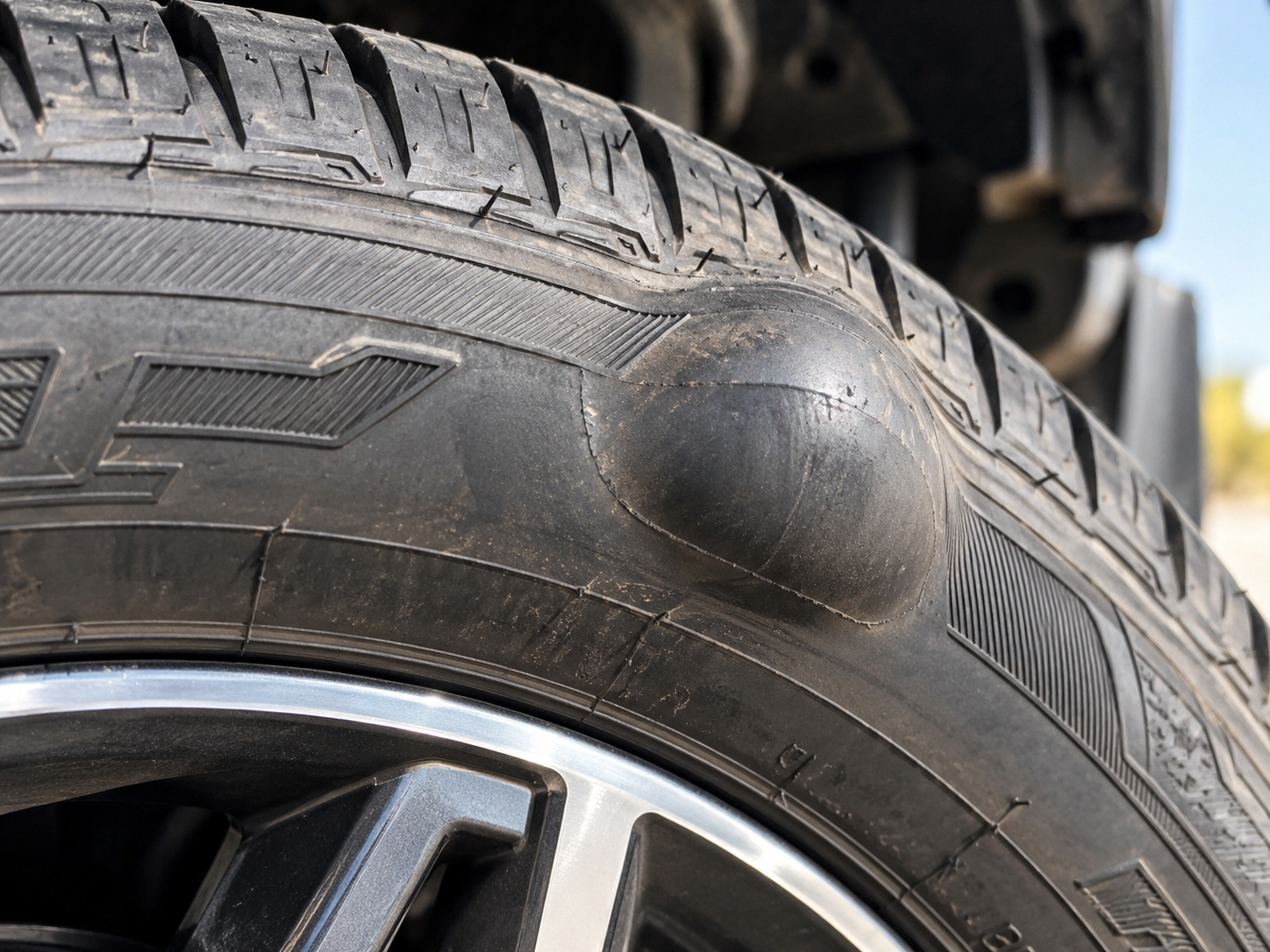
Visible cracks and worn tread are early warnings your tires need attention.
5. Uneven Wear Patterns Across the Tire
Uneven wear is common on Colorado vehicles that see a mix of city streets, mountain passes, and occasional off‑pavement adventures. If one edge of the tire is more worn than the other, the center is bald while the edges look fine, or you see cupping or scalloped dips, something is off with your alignment, inflation, or suspension. Not only does this shorten tire life, it can hurt handling and braking. New tires plus a proper alignment will restore even contact with the road and help your next set last longer.
💡 Safety Tip: Rotate your tires regularly—typically every 5,000–7,500 miles—to promote more even wear, especially if you frequently drive in the mountains.
6. New Vibration, Shaking, or Road Noise
Colorado roads aren’t perfectly smooth, but you get used to what your vehicle normally feels like. If you suddenly notice more vibration in the steering wheel, shaking in the seat, or a humming or thumping noise that gets louder with speed, your tires may be the culprit. Common causes include internal tire damage, separated belts, severe uneven wear, or lost wheel weights. Any new vibration is worth checking out quickly; catching a failing tire early can prevent a dangerous situation on I‑25 or I‑70.
7. Tire Age: Even “Good-Looking” Tires Expire
Even if your tread looks decent, older tires can become hard and brittle, especially in Colorado’s dry, sunny climate. Most manufacturers recommend replacing tires around six years from the date of manufacture, and definitely by ten years, regardless of mileage. You can find the tire’s age in the DOT code on the sidewall—the last four digits show the week and year it was made. If your tires are aging out, plan to replace them before another winter season arrives.
Reduced Traction in Colorado Weather: A Big Red Flag
One of the most important signs you need new tires is how your vehicle feels in real‑world Colorado weather. If you notice longer stopping distances in the rain, slipping when starting from a stop in light snow, or your ABS and traction control activating more often, your tires likely aren’t gripping the way they should. With our sudden spring snowstorms and icy morning commutes, strong traction is essential. Don’t wait until the first big storm exposes just how worn your tires really are.
💡 Safety Tip: Give yourself extra following distance and gentle steering and braking inputs whenever the road is wet, slushy, or icy—especially if you suspect your tires are nearing the end of their life.
How Peak Tire & Wheel Makes New Tires Simple in Denver
When you spot any of these warning signs, the next step is straightforward: get safe, reliable replacement tires. Peak Tire & Wheel helps Colorado drivers choose the right tires for their vehicles, driving style, and budget—from all‑season options for daily Denver commuting to more aggressive tread for mountain and ski‑season travel. You get professional guidance so you’re not guessing in front of a wall of tire brands and sizes.
Even better, you don’t have to sit in a waiting room or rearrange your day. Peak Tire & Wheel offers convenient mobile tire installation within our 25 mile radius of the Denver metro area. A fully equipped service vehicle comes to your home, office, or job site, installs and balances your new tires on the spot, and hauls away the old ones. You get dealership‑level service without ever leaving your driveway.
Stay Ahead of Tire Trouble—Call for a Quote Today
Your tires are the only part of your vehicle that actually touch the road, and in Colorado’s demanding conditions, they work hard every mile. If you’ve noticed worn tread, low tread depth, cracks, bulges, uneven wear, new vibration, aging rubber, or slipping in bad weather, it’s time to take action. Replacing your tires before they fail is one of the smartest safety investments you can make.
Let Peak Tire & Wheel bring the tire shop to you with new tires and professional mobile installation anywhere in the Denver metro area. To get started, request a tire quote today at 720-474-1242 and drive with confidence on every Colorado road.